



We offer:
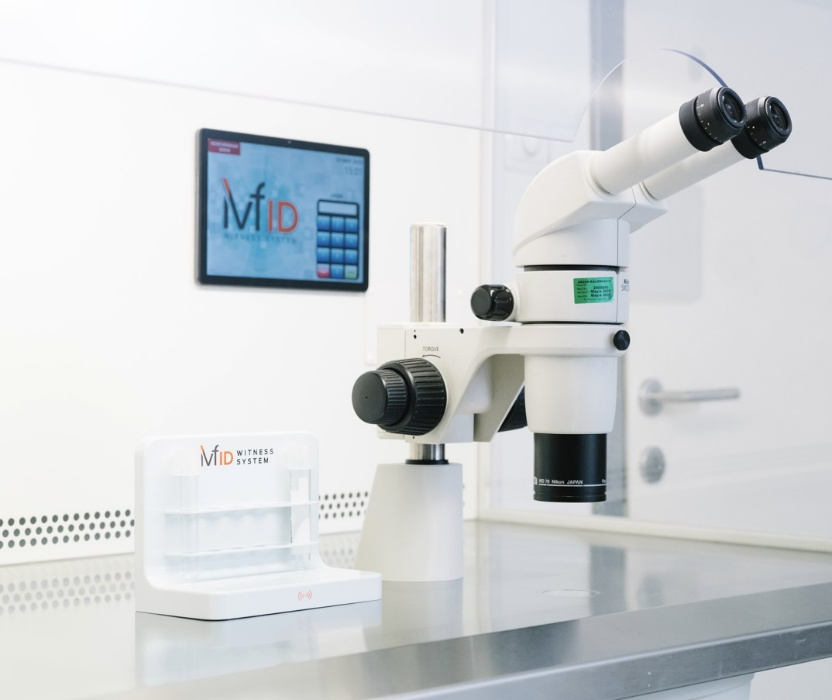
IVF-ID Witness System
A modern electronic identification technology that ensures the safety, accurate identification, and full traceability of the patient's biological material – oocytes, sperm, and embryos – at all stages of IVF procedures.
Using RFID technology, the system automatically monitors each sample at every stage in the laboratory, from reception to embryo transfer. Every action is checked in real-time, reducing the risk of human error and ensuring maximum precision and safety of the process.
The IVF-ID Witness System provides patients with additional peace of mind and confidence, as their biological material is protected in accordance with high international safety standards.
Spindle Imaging System
A modern oocyte visualization technology that allows embryologists to observe in detail the condition of the oocyte spindle (cell division structure) during the IVF procedure.
The spindle plays a crucial role in the correct distribution of chromosomes and is directly related to oocyte quality and embryo development potential. Using special polarized light technology, the system non-invasively assesses the spindle structure, helping embryologists select the optimal timing and strategy for fertilization.
The use of the Spindle Imaging System increases the precision of the procedure, improves the possibility of embryo development, and helps optimize the chances of a successful pregnancy.
Polarized Light Microscopy
An advanced microscopic technology that allows embryologists to non-invasively assess oocyte quality, integrity, and developmental potential during IVF procedures.
By using polarized light, the system provides detailed visualization of important oocyte structures, including the spindle and the outer membrane, which contributes to more accurate assessment and optimal embryological decision-making.
Polarized Light Microscopy improves the oocyte selection process, increases fertilization efficiency, and enhances the potential for successful embryo development, ultimately contributing to better outcomes in IVF programs.
Advanced Embryo Monitoring Systems
A modern embryo development monitoring system that ensures continuous observation and stable, optimal cultivation conditions for embryos in the IVF laboratory.
With the help of innovative technologies, embryologists can monitor each stage of embryo development in real-time without removing it from the incubator, which reduces the impact of environmental factors and promotes safer and more stable development.
The system provides a detailed assessment of embryo growth dynamics, helping specialists select embryos with the best developmental potential. As a result, the effectiveness of the IVF procedure and the possibility of achieving a successful pregnancy are increased.
Complete Traceability Systems
A modern control and traceability system that ensures accurate identification of biological material, process control, and maximum patient safety at all stages of the IVF procedure.
The system monitors the movement of oocytes, sperm, and embryos at every stage in the laboratory: from sample reception to embryo transfer. All actions are automatically recorded and checked in real-time, significantly reducing the risk of human error and ensuring the complete precision of the procedure.
Complete Traceability Systems provide patients with additional confidence and peace of mind, as their biological material is protected in accordance with modern international quality and safety standards.
ASFI Fertilization Method
An advanced reproductive technology used in cases of complex and intricate infertility where standard IVF approaches are less effective.
This method is based on maximizing the optimization of the fertilization process – controlling the interaction between sperm and oocytes, improved selection techniques, and high precision of laboratory conditions.
The ASFI method allows embryologists to approach each case individually, increase the chances of successful fertilization, and promote the acquisition of high-quality embryos, which ultimately improves the probability of pregnancy.